The Small Business Website Checklist: 10 Things Your Site Needs to Actually Bring in Customers
Having a website and having a website that works for your business are two different things. A lot of small business sites are technically live but functionally invisible — no leads, no rankings, no real return.
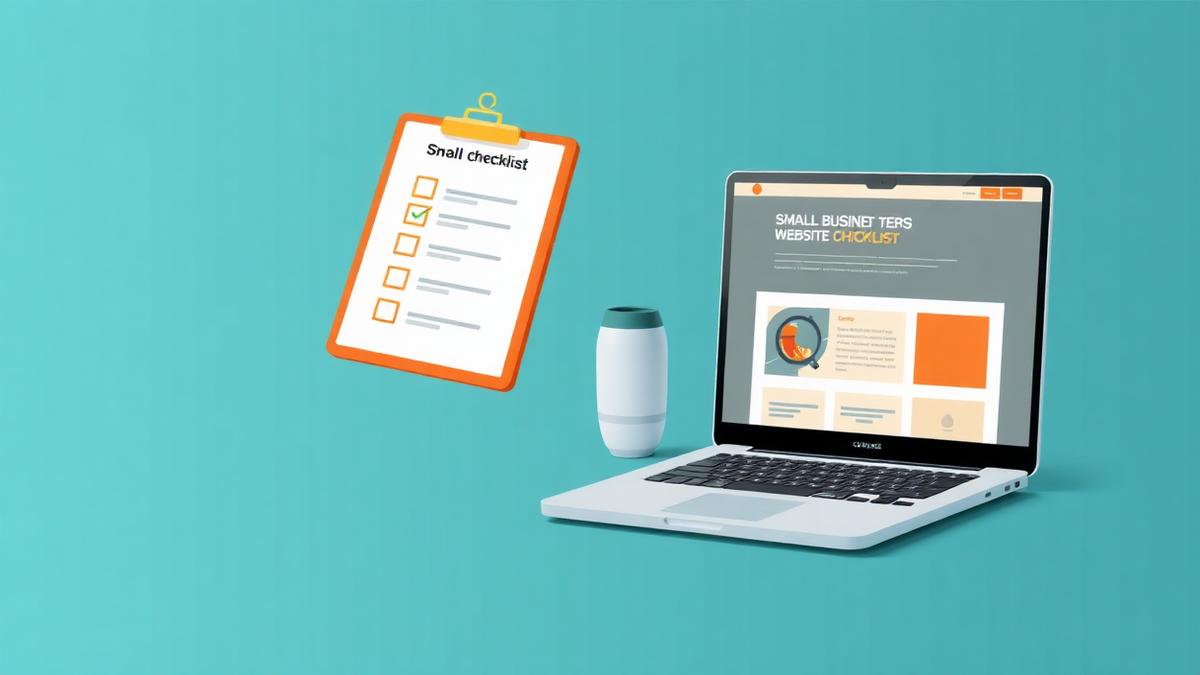
Here are the 10 things every small business website needs to actually pull its weight.
This list works whether you're evaluating a site you already have, reviewing a quote from a builder or freelancer, or setting expectations before a new build starts. Treat it less like a nice-to-have wishlist and more like a baseline — a site missing several of these isn't really finished yet, even if it's technically live.
- 1Professional, Mobile-First Design
More than half of small business web traffic comes from phones. If your site isn't built mobile-first — fast, readable, and easy to tap through on a small screen — you're losing visitors before they even see your offer.
- 2Clear Value Proposition Above the Fold
Visitors decide whether to stay on your site within seconds. The top of your homepage should answer, immediately: what do you do, who is it for, and what should I do next?
- 3Contact Forms That Actually Work
It sounds basic, but broken or ignored contact forms are one of the most common small business website failures. Every form needs a clear destination — ideally into a CRM, not just a scattered inbox — so no lead falls through the cracks.
- 4Google SEO Essentials
Page titles, meta descriptions, a submitted sitemap, and analytics tracking are the baseline for showing up in search at all. Without them, even a beautifully designed site can stay invisible to the customers searching for exactly what you offer.
- 5Fast Load Times
Slow-loading pages lose visitors and get penalized in search rankings. Unoptimized images and bloated page builders are the most common culprits on small business sites.
- 6A CRM Behind the Scenes
A website that generates a lead is only half the job — you need somewhere for that lead to go. A built-in CRM (like HootBiz) that tracks pipeline, automates follow-up emails, and handles scheduling turns a static site into an actual sales tool.
- 7Easy Path to Book or Buy
Whatever your conversion goal is — booking a call, filling out a quote request, making a purchase — that path should be no more than one or two clicks from anywhere on the site.
- 8Real Content, Not Placeholder Text
Generic “lorem ipsum”-style filler copy or thin, templated descriptions hurt both credibility and SEO. Content should be written and organized specifically for your business, your services, and the questions your customers are actually searching.
- 9Reviews and Social Proof
Testimonials, ratings, and client logos build trust fast — especially for service businesses where the buying decision depends on credibility as much as price.
- 10A Plan for Ongoing Updates
Your business will change: new services, new hours, a rebrand, a pricing update. A website needs a clear, known path for making those updates — whether that's doing it yourself or having a support team you can reach — instead of sitting frozen the day it launches.
Bonus: AI Visibility
Search behavior is shifting beyond the traditional Google results page — more customers now ask AI assistants and AI-powered search tools directly for local recommendations. A website built with clear, well-structured content (proper headings, straightforward service descriptions, accurate business information) is easier for these tools to understand and surface, in addition to ranking well in classic search. It's an increasingly relevant item to add to any small business website checklist going into 2026 and beyond.
Putting It All Together
None of these 10 items are exotic or expensive to get right — they're just easy to skip when a website is built quickly and cheaply, or built without SEO and lead-generation in mind from the start. Every Hoot Free Website plan is built to check all 10 boxes by default: professional mobile-first design, Google SEO essentials, and the HootBiz CRM included, with no separate design or build fee.
A useful exercise: pull up your current site right now on your phone, on a slow connection if possible, and walk through this list item by item as if you were a first-time visitor. Most small business owners find at least two or three gaps — usually the CRM connection, the SEO basics, or a clear next step for the visitor. Fixing those three tends to move the needle more than a full redesign would.
Frequently Asked Questions
Most small businesses do well with 3–5 focused pages — home, services, about, contact, and sometimes a dedicated page per major service — rather than a sprawling site that's hard to maintain.
Not required, but regularly published, relevant content (like this checklist) helps search engines understand what your business does and gives you more pages that can rank for specific searches.
Connecting lead capture (forms, calls, bookings) to an actual CRM. A beautiful site that loses leads to an unchecked inbox is still an underperforming site.
Get a website built to this checklist from day one — no design fees, just $15/mo managed hosting once you're live.
Start Your Free Website →