How Much Should a Website Really Cost in 2026? ($500 vs. Free vs. DIY)
Search “how much does a website cost” and you'll get answers ranging from $200 Fiverr gigs to $500 template builds to $10,000+ custom agency projects — plus a growing number of companies advertising a “free website.” For a small business owner just trying to get online, that spread isn't helpful. It's confusing. So let's break down what you're actually paying for at each price point, and what a website needs to include no matter what it costs.
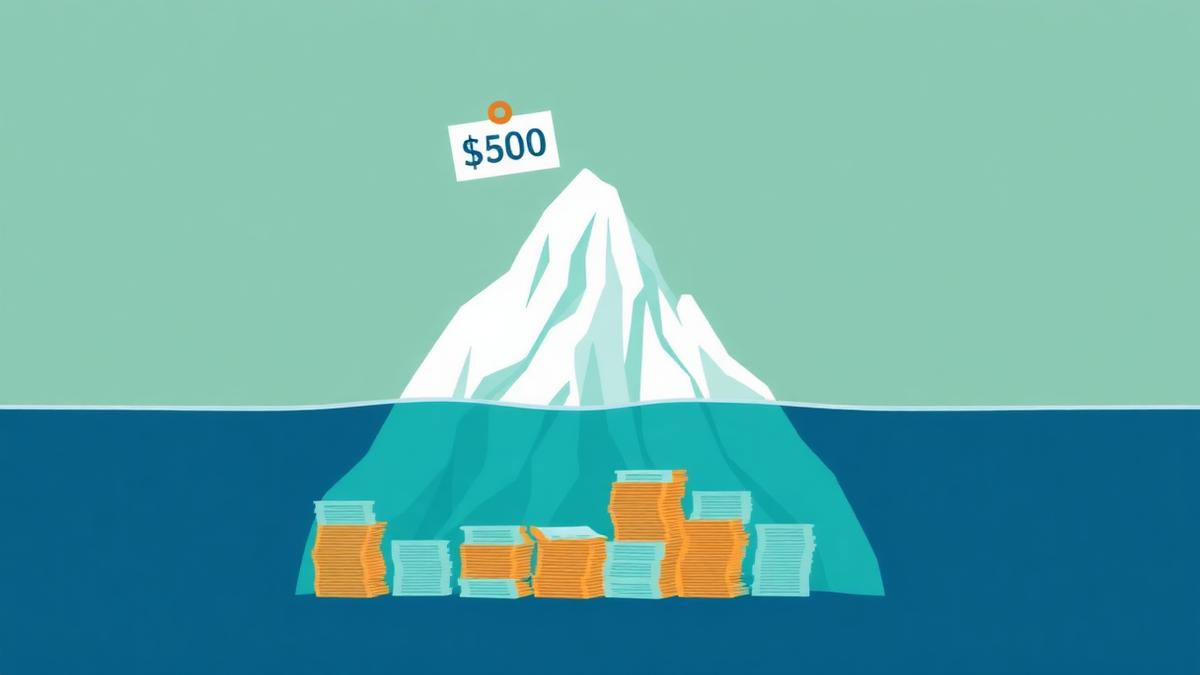
The $500 Website: What You're Actually Buying
A $500 website is almost always a templated build: a freelancer or small agency drops your logo and copy into an existing theme, swaps the stock photos, and hands you the keys. That can work fine for a very simple one-page site. But at this price point, a few things are usually missing or limited:
- Design customization — you're working inside a template's constraints, not a layout built around your brand.
- Revisions — most $500 packages cap you at one or two rounds of changes before extra hours are billed.
- SEO setup — sitemaps, metadata, and analytics are often skipped entirely or left as an upsell.
- Ongoing support — once the site ships, the relationship usually ends. Need a change in six months? That's a new invoice.
None of this makes a $500 website a bad option — it's often exactly right for a very early-stage business that just needs something up fast. But it's worth knowing what's not included before you buy. The gap usually isn't visible on launch day; it shows up three, six, or twelve months later, when you want to add a page, update a price list, or figure out why the site never shows up on Google.
The “Free Website”: How Is That Possible?
“Free website” offers, including our own Hoot Free Website program, work because the business model is different. Instead of charging a one-time design fee, the design and build costs are covered by an ongoing managed hosting subscription — in our case, $15/month. That monthly relationship is what makes it possible to include a full custom build (up to 5 pages), brand-matched design, stock photography, content editing, a built-in CRM, and Google SEO essentials without a separate build invoice.
It's the same logic as a printer that's cheap up front and profitable on ink, except here the ongoing cost is transparent, flat, and buys you an actual service relationship instead of a one-time handoff.
What a Website Should Include, No Matter the Price
Whether you spend $0, $500, or $5,000, a small business website should include a baseline of things:
- A design that reflects your brand, not a generic template look
- Mobile-responsive layout (most of your visitors are on a phone)
- Basic on-page SEO: titles, metadata, a sitemap, and analytics
- A way to capture leads — forms that actually route somewhere
- A plan for what happens when you need an update
A Quick Example
Picture two coffee-shop owners opening within a month of each other. One pays a freelancer $500 for a five-page template site, then discovers hosting is a separate $25/month, SEO wasn't set up, and every menu update after launch costs $90 an hour. Over 18 months, that “cheap” website runs closer to $1,300. The other signs up for a free, professionally built site at $15/month managed hosting, with SEO essentials and a CRM included from day one — 18 months of hosting runs $270, with no separate line items for the basics. Same result — a live, working website — very different total spend and a very different amount of the owner's own time.
Free vs. $500 vs. DIY: A Side-by-Side Look
| Free Website (Hoot) | $500 Template Build | DIY Builder | |
|---|---|---|---|
| Upfront cost | $0 | $500 | $0–$20 to start |
| Ongoing cost | $15/mo hosting | Hosting billed separately | $16–$50+/mo |
| Who builds it | Design team | Freelancer/agency | You |
| Time to launch | 2–3 weeks | Varies widely | Weeks of your own time |
| CRM included | Yes (HootBiz) | Rarely | Sometimes, as paid add-on |
| SEO setup | Included | Often extra | Manual, DIY |
So What Should You Actually Pay?
The honest answer: it depends on what you're optimizing for. If your time is the scarce resource, a done-for-you build (free or paid) will get you live faster with less guesswork. If you want full creative control and don't mind the learning curve, DIY builders are a reasonable path. What you should avoid is paying $500 or more and still ending up with a template that needs a redesign in a year, or a “free” offer with no real design work behind it.
It also helps to think in total cost of ownership rather than sticker price. A $500 build with $30/month hosting and no included SEO or CRM can easily cost more over two years than a $0 build with $15/month hosting that includes both. Before comparing quotes, add up 24 months of hosting, plan for at least a couple of rounds of updates, and price out a basic CRM tool separately if one isn't included — then compare that total, not just the number on the first invoice.
Frequently Asked Questions
For a very simple, single-purpose site with no CRM or SEO needs, yes — it can be a reasonable starting point. Just budget separately for hosting, future edits, and SEO setup, since those are rarely included at that price.
Once you include hosting, occasional updates, and any marketing tools, most small businesses land somewhere between $150 and $600 per year — whether that's paid upfront in one build or spread out monthly through a managed plan.
Because the revenue comes from an ongoing hosting or service subscription instead of a one-time design fee — the same model used by many software and telecom companies.
Want a professionally designed, 5-page website built for you at no design cost — with CRM, SEO, and support included?
Start Your Free Website →